

Affordable tablets are now being considered as productivity devices because they offer high performance, quality displays, and increasingly complete work features in a compact design.

If you’re looking for a tablet for work, note-taking, online meetings, or document processing, keep reading this review until the end. There are many interesting options that can be tailored to your needs—make sure you don’t choose the wrong one.
Tablets are no longer seen only as entertainment devices. The transcript highlights that performance improvements now allow tablets to handle many productivity tasks that were once associated only with laptops. The combination of faster processors, larger RAM, sharp displays, and high-capacity batteries means that mid-range tablets can now be used for typing documents, joining online meetings, creating presentations, and even light creative work.

One statement in the video notes: “Today, tablets are developing very rapidly with high performance, lightweight, and compact designs. Tablets can already replace many laptop tasks for productivity.” This shows how competition in the tablet market by mid-2026 has become increasingly exciting, especially for users who prioritize mobility.

How Samsung Opens the Recommendation List
Samsung introduces two different options aimed at users with distinct usage needs. Samsung Galaxy Tab S10 Lite kicks off the list with a 10.9-inch high-resolution display, offering a 90 Hz refresh rate and brightness up to 600 nits. Powered by the Exynos 1380 chipset, it comes with 8 GB RAM and storage up to 512 GB, expandable via microSD up to 2 TB.

Additional highlights include an 8,000 mAh battery with 45W fast charging and the presence of Galaxy AI features to support daily productivity. Interestingly, the device is available in both WiFi-only and 5G versions, giving users flexibility in connectivity. Meanwhile, the Samsung Galaxy Tab A11 Plus 5G takes a different approach. Its main advantage lies in full 5G cellular support via SIM card, making it ideal for working from various locations without relying on another device’s hotspot.
This tablet is equipped with a 4 nm Dimensity 7300 chipset, 6 GB RAM, 128 GB storage, and a 7,400 mAh battery with 25W fast charging—rounding out a well-balanced specification package.
Why Xiaomi and Poco Attract Attention in This Price Segment
Both devices rely on the Snapdragon 7+ Gen 3 as their main engine. While they share a similar price range, their focus differs slightly.
Xiaomi Pad 7 emphasizes the visual experience. Its 11.2-inch 3.2K display paired with a 144 Hz refresh rate delivers sharp and smooth visuals when switching between apps. The slim aluminum uni-body design adds a premium feel.

A unique feature highlighted in the transcript is the Wet Touch Display, which keeps the screen responsive even when fingers are wet—something rarely found in tablets at this price level. The 8,850 mAh battery with 45W fast charging rounds out the package for long-lasting use. In contrast, the Poco Pad prioritizes storage capacity. With 512 GB of internal storage, it offers one of the largest options in this recommendation list, giving ample space for work documents, presentations, and multimedia collections.
It also comes with a 3.2K 144 Hz display certified by TÜV Rheinland Eye Care, 8 GB RAM, an 8 MP front camera for online meetings, and the same 8,850 mAh battery with 45W fast charging. For users who frequently store large files and prefer not to rely on external storage, these specifications provide a significant advantage.
Why Honor and Huawei Are Worth Considering for Productivity
Honor Pad 10 focuses on long-duration work comfort. Its 12.1-inch IPS display offers 2.5K resolution, a 120 Hz refresh rate, and Eye Comfort Display features to help reduce eye strain during extended use.
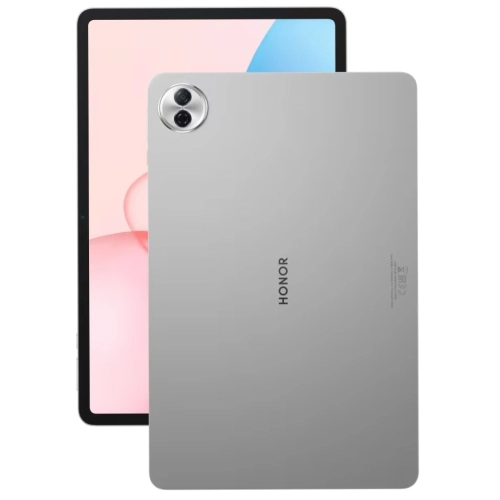
Under the hood, it runs on the Snapdragon 7 Gen 3 with RAM Turbo 8+8 GB, supported by a 10,100 mAh battery and 35W fast charging—allowing longer productivity sessions without constantly searching for a power outlet. Additional value comes from Magic Portal and Magic Ring, which simplify connectivity with other Honor devices within the same ecosystem.
Meanwhile, the Huawei MatePad 11.5 takes a different approach, prioritizing a slim design and a strong note-taking and content creation experience. At just 6.1 mm thick, it’s easy to carry to the office, campus, or co-working spaces. Its display delivers 2.5K resolution, a 120 Hz refresh rate, and brightness up to 600 nits.
How Do the Moto Pad 60 Neo and Moto Pad 60 Pro Perform?
Motorola offers two tablets with distinct characters. Moto Pad 60 Neo is the more affordable option. It runs on the MediaTek Dimensity 6300 chipset with 4 GB RAM and 128 GB storage. The 11-inch display delivers 2.5K resolution with a 90 Hz refresh rate. It comes with Android 15, a 7,040 mAh battery with 20W fast charging, and four Dolby Atmos speakers for enhanced multimedia.

On the other hand, Moto Pad 60 Pro targets users who need higher performance. It features a 12.7-inch IPS LCD with 3K resolution and a 144 Hz refresh rate—the largest display in the recommendation list. Powered by the MediaTek Dimensity 8300 chipset and 8 GB RAM, it also packs a 10,200 mAh battery with 45W fast charging. Additional highlights include AI features, Smart Connect for cross-device collaboration, Moto Pen Pro stylus support, and four JBL Dolby Atmos speakers.
Huawei equips the device with the Kirin T82B chipset, 8 GB RAM, 256 GB storage, and an upgraded cooling system. One of its main attractions is support for the M-Pencil (3rd Gen) stylus and AI-powered features, making it especially appealing for users who enjoy digital note-taking, sketching, or visual idea processing.
Which Tablet Fits Your Needs?
Each tablet offers different strengths, making the ideal choice dependent on usage priorities:
- High Mobility Samsung Galaxy Tab A11 Plus 5G – great for users who often work outside the office thanks to full 5G SIM support.
- Typing, Note-Taking, and Content Creation Huawei MatePad 11.5 – slim body, M-Pencil (3rd Gen) stylus, and AI tools for productivity.
- Top-Quality Display Xiaomi Pad 7 – sharp 3.2K 144 Hz screen with Wet Touch Display for unique usability.
- Massive Storage Poco Pad – 512 GB internal storage, perfect for users with large work files and presentations.
- Long Battery Life Honor Pad 10 and Moto Pad 60 Pro – both feature batteries above 10,000 mAh, supporting extended use without frequent charging.
The mid-range tablet competition is becoming more exciting, as each manufacturer now chooses its own product identity rather than simply racing for higher specifications. Some focus on AI, others highlight display quality, while others emphasize 5G connectivity or large storage.
Where mobility is quite high, choosing a tablet based on daily needs makes far more sense than chasing the highest specs. So, if your main requirement is working while moving from place to place, pick a device that truly matches your everyday activities. Don’t get carried away by specifications that you may never fully utilize.